







What is Clinical Data Intelligence?
Every clinical decision depends on the full patient picture. Most clinical AI fails to deliver it, for one of two reasons.
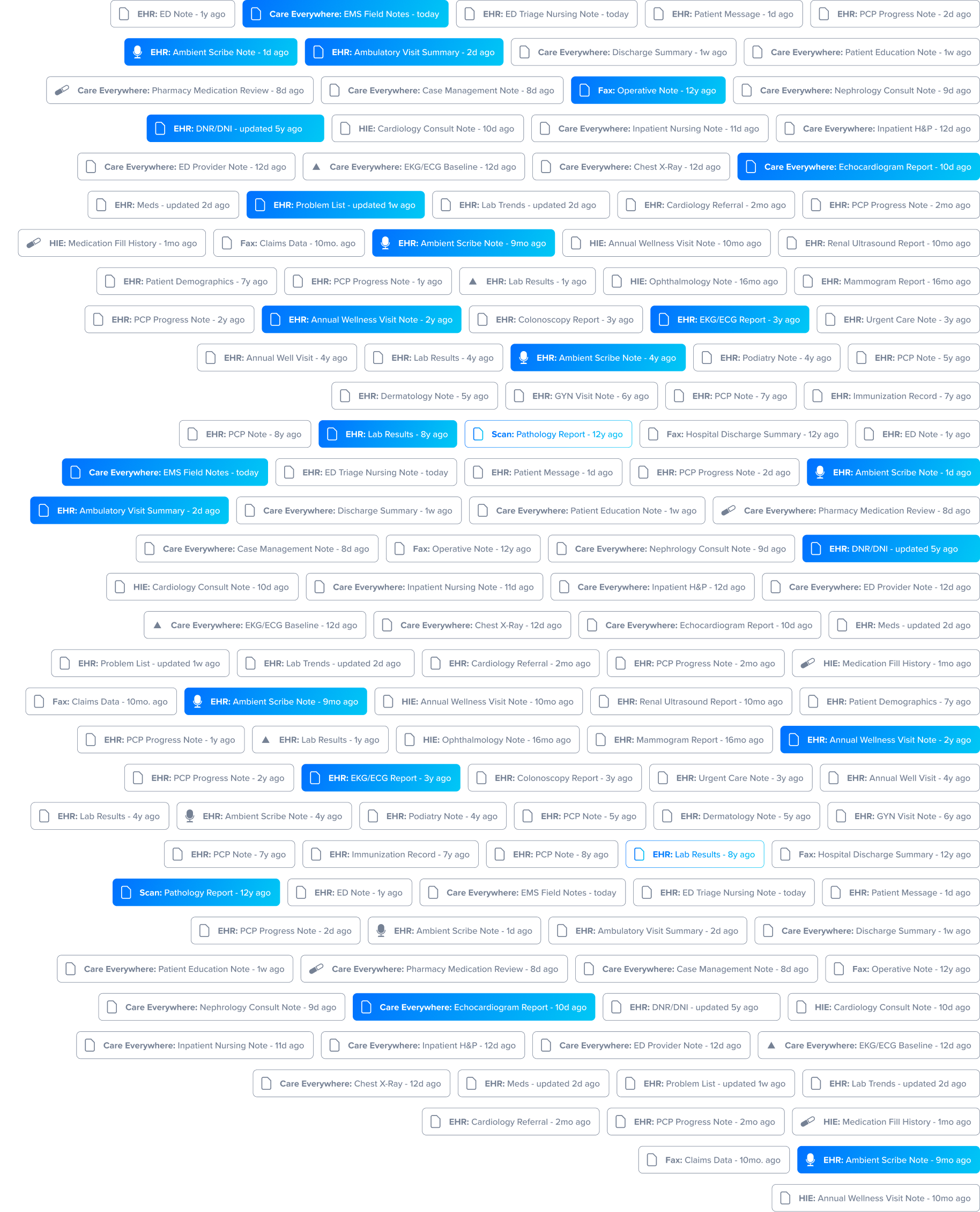
The chart can't be read. About 80% of clinical data is unstructured, and the EHR was never built to read any of it, including its own clinical notes. Within that, the hardest 30–40% arrives in formats even other clinical AI can't reach: scanned documents, faxes, outside records, HIE feeds, imaging reports.
The chart can't be understood. Even data that gets read isn't clinically interpreted. A chronic condition documented in a scanned outside record years ago can change the surgical plan, the medication choices, and the risk stratification for every future encounter. Reading is retrieval. Understanding is clinical reasoning.
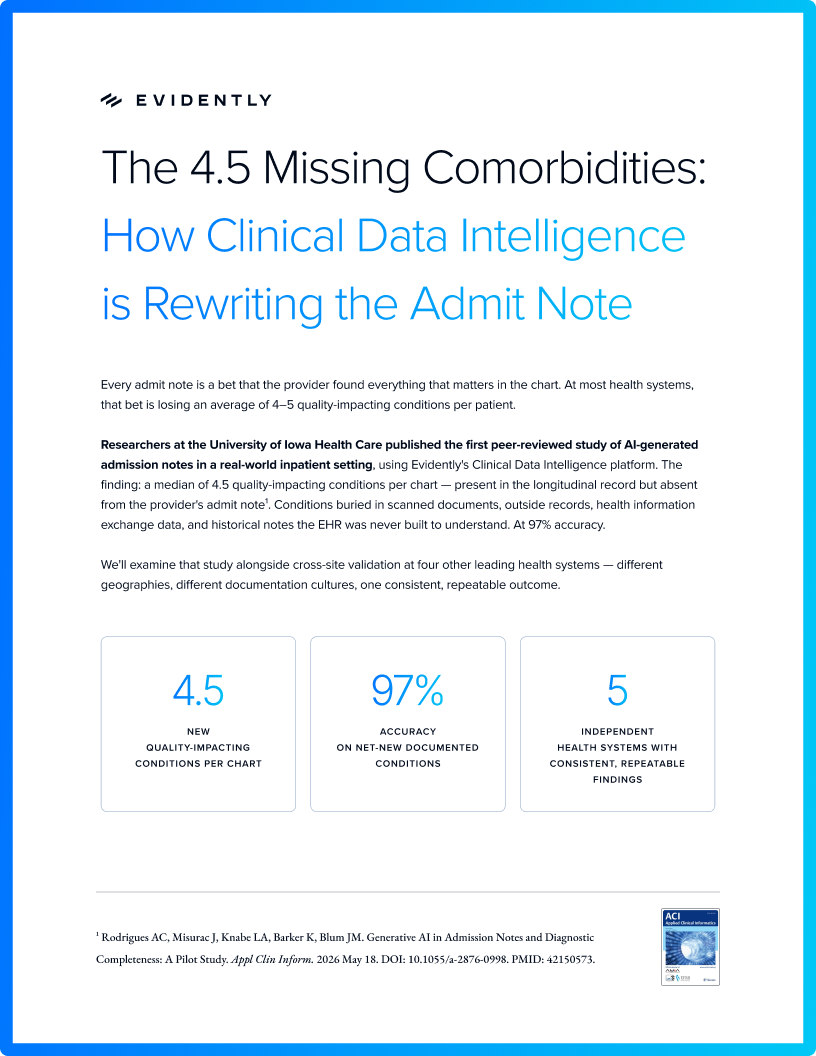
Clinical Data Intelligence addresses both. A peer-reviewed study published in Applied Clinical Informatics (Rodrigues et al., 2026) measured 97% suggestion accuracy on net-new conditions across 104 adjudicated clinical suggestions at University of Iowa Health Care — conditions that existed in the record but had never been documented.